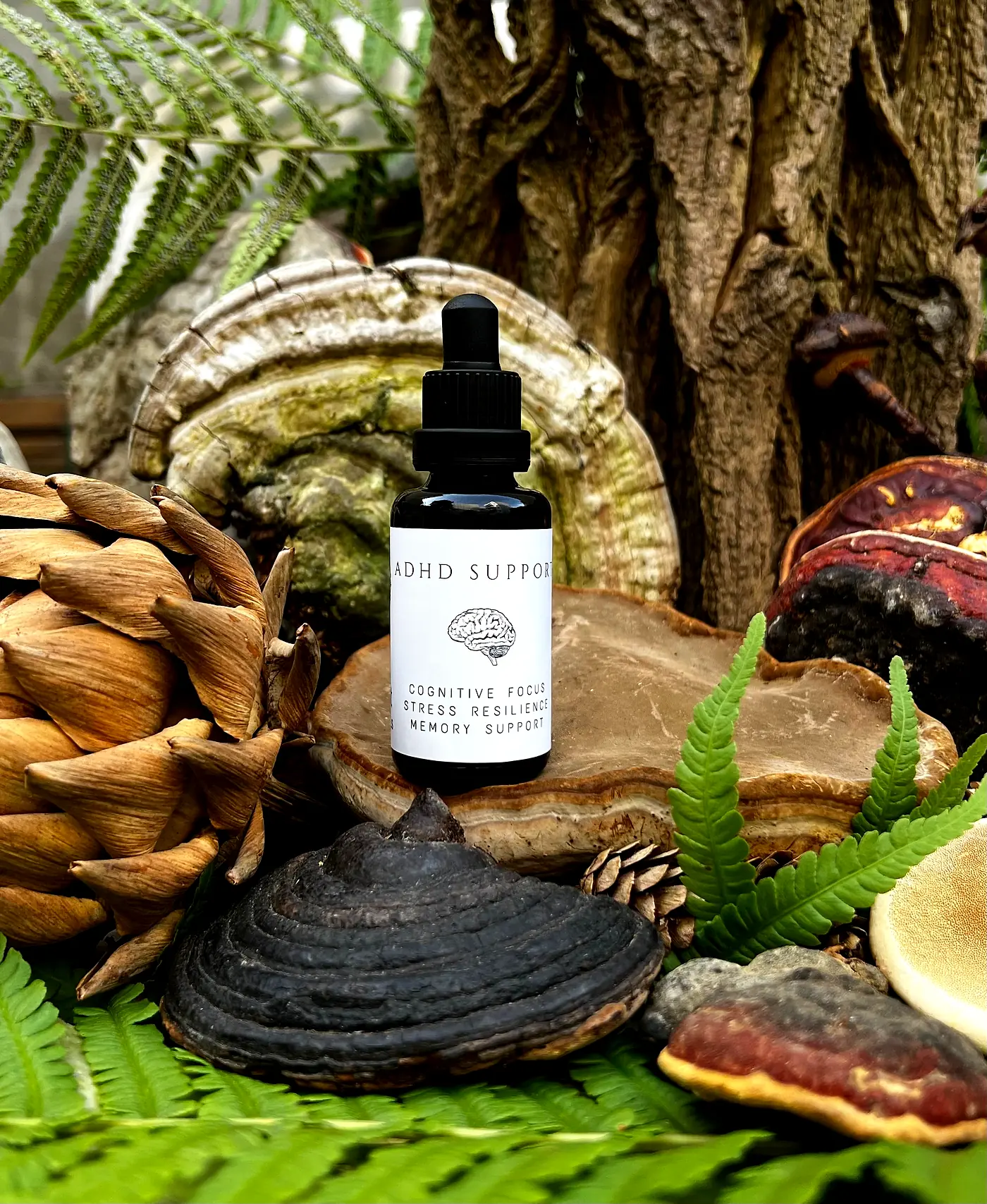
Attention Tonic, a 30 ml dropper bottle Spagyric
Compositions · Daytime · Tonic

Attention Tonic

Steady · clear · unhurried

Seven plants and mushrooms with long traditions as daytime tonics, gathered into one bottle for the working day. Not a stimulant and not a medicine — a slow daily ritual, without the caffeine cliff.

30ml€44
PreparationSpagyric composition
Ingredients7 herbs & fungi
Ethanol gradePharma-grade
Suggested use15–30 drops daily
The Story

Some days ask for a long, quiet kind of attention: a page to write, a craft to finish, a conversation to stay inside. This composition is built for those days. It is not a jolt. It is a small daily ritual of plants that people have reached for in the morning for centuries.

Seven ingredients from four traditions. Lion's mane, the shaggy white mushroom of East Asian kitchens and temple gardens. Gotu kola, the creeping leaf that Ayurveda keeps for study and meditation. Rhodiola and ashwagandha, the northern and southern roots of steadiness. Cordyceps, the mountain mushroom of endurance. Reishi, the grounding one. Rosemary, the old herb of remembrance.

"Not louder. A calmer, wider morning."

It is a tonic: taken daily, noticed slowly, if at all. It is not a rescue for a busy afternoon, not a treatment, and not a replacement for anything a clinician has prescribed. If you take medication, read the notes below and ask your prescriber first.

The seven ingredients
Lion's mane Hericium erinaceus

A white, cascading mushroom that grows on old hardwood. Eaten in East Asian cooking and kept by mountain monks as a companion to meditation. Extracted in alcohol and water to carry both its resinous and its watery parts.

Reishi Ganoderma lucidum

The lacquered mushroom of Chinese and Japanese painting, long called a mushroom of calm. Here it is the grounding note under the brighter herbs.

Rhodiola Rhodiola rosea

The golden root of Arctic and alpine slopes, carried by northern travellers and farmers through long, dark seasons. Brisk, rose-scented, a little bitter.

Cordyceps Cordyceps sinensis

The mountain mushroom that Himalayan herders associated with endurance at altitude.

Gotu kola Centella asiatica

A small round-leaved creeper of South Asian riverbanks. In Ayurveda it is a herb for study, recitation and meditation.

Rosemary Salvia rosmarinus

“Rosemary, that’s for remembrance.” The Mediterranean herb of students and weddings, and the aromatic top note of the bottle.

Ashwagandha Withania somnifera

The Ayurvedic root whose name means “smell of the horse”, traditionally taken for steadiness. It rounds the composition off so it stays calm rather than sharp.

How to take it

Suggested use: 15–30 drops in water or under the tongue, once or twice a day. Morning and midday suit it best — not the evening, because rhodiola and cordyceps are brisk herbs that can push sleep back if taken late.

A tonic is a rhythm rather than a moment. Take it for a few weeks and notice how your days feel, without expecting a particular effect.

Rhythm: 8 weeks on, 1 week off. Do not exceed the suggested amount.

Safety notes
  • Stimulant medication: rhodiola and cordyceps are brisk herbs. Ask your prescriber before combining them with any stimulant medication.
  • SSRIs, SNRIs, MAOIs or other mood medication: rhodiola may interact. Ask your prescriber before use.
  • Autoimmune conditions or immunosuppressants: reishi and cordyceps act on the immune system. Ask your clinician first.
  • Thyroid medication: ashwagandha can affect thyroid hormone levels. Ask your clinician first.
  • Pregnancy and breastfeeding: do not use — there is not enough safety data for ashwagandha and rhodiola.
  • This is a traditional herbal preparation, not a medicine. It does not diagnose, treat or prevent any condition. If you are worried about your attention or concentration, please talk to a clinician.
  • Keep out of reach of children. Contains alcohol.